Crochet patterns use specialized shorthand to efficiently communicate complex instructions. From US and UK written abbreviations to Japanese symbols and Chinese alphanumeric codes, each system offers unique advantages for different crochet styles.
Importantly, abbreviations may vary based on individual designer preferences and regional traditions. Even within established systems, pattern writers often develop personal variations for specialized techniques. Before beginning any project, always review the pattern’s abbreviation key and consider the context when interpreting unfamiliar terms.
This guide will help you navigate diverse crochet notation systems with confidence.
Basic Crochet Abbreviations
These fundamental abbreviations form the core vocabulary for most crochet patterns in English-language publications:
| Abbreviation | Meaning | Explanation |
|---|---|---|
| ch | chain | The foundation of most crochet projects. Creates a series of connected loops that serve as the base for other stitches. |
| sl st | slip stitch | A very short stitch used to join work, create a flat seam, or move across stitches without adding height. |
| sc | single crochet | One of the most basic stitches that creates a tight, dense fabric. Worked by inserting hook, yarn over, pull through (2 loops on hook), yarn over, pull through both loops. |
| hdc | half double crochet | Medium height stitch between single and double crochet. Yarn over before inserting hook, then pull through all three loops at once. |
| dc | double crochet | Taller stitch that creates a more open fabric. Yarn over before inserting hook, yarn over and pull through (3 loops on hook), yarn over and pull through 2 loops twice. |
| tr | treble crochet | Also called triple crochet, a tall stitch. Yarn over twice before inserting hook, then work through two loops at a time. |
Additional basic terminology commonly found in patterns includes:
- rnd/rd/r – round (when working in circles)
- row/r – a horizontal line of stitches
- st(s) – stitch(es)
- yo – yarn over
- rep – repeat
- beg – beginning
- RS/WS – right side/wrong side
When a pattern includes instructions like “ch 25, sc in 2nd ch from hook and in each ch across (24 sc),” you’ll know to create 25 chains, then work a single crochet in each chain except the one nearest to your hook, resulting in 24 single crochet stitches.
Advanced Crochet Abbreviations
As patterns become more intricate, specialized abbreviations help communicate complex techniques concisely:
Shaping and Construction Techniques
| Abbreviation | Meaning | Explanation |
|---|---|---|
| inc | increase | Adding additional stitches to widen the project, typically by working multiple stitches into the same stitch. |
| dec | decrease | Reducing the number of stitches to narrow the project, typically by working two stitches together. |
| sk | skip | Instructions to bypass a stitch in the row below, creating patterns or shaping. |
| tog | together | Working multiple stitches as one, usually to decrease. |
| picot | picot | A small decorative loop created by chaining a few stitches and then anchoring the chain. |
Stitch Placement and Texture Techniques
| Abbreviation | Meaning | Explanation |
|---|---|---|
| BLO | back loop only | Working in only the back loop of a stitch, creating a horizontal ridge on the front side. |
| FLO | front loop only | Working in only the front loop of a stitch, creating a horizontal ridge on the back side. |
| bp | back post | Working around the post of the stitch from the back to the front, creating texture. |
| fp | front post | Working around the post of the stitch from the front to back, creating texture. |
| cl | cluster | Multiple incomplete stitches worked together into one stitch. |
| shell | shell | Multiple stitches worked into the same space. |
Complex patterns often feature specialized stitch combinations that may have their own abbreviations:
- bpdc – back post double crochet
- fpdc – front post double crochet
- dc2tog – double crochet 2 together (a specific decrease method)
- puff – puff stitch (multiple yarn overs pulled through the same stitch)
- bobble – bobble stitch (similar to puff but closed differently)
These advanced abbreviations allow designers to create textured fabrics, intricate lace patterns, and three-dimensional elements while keeping written instructions manageable.
US vs UK Crochet Terms
One of the most confusing aspects for crocheters working with international patterns is the difference between US and UK terminology. The same stitch can have different names—and thus different abbreviations—depending on which system the pattern follows.
US vs UK Terminology Comparison Chart
| US Term | US Abbreviation | UK Term | UK Abbreviation |
|---|---|---|---|
| slip stitch | sl st | slip stitch | ss |
| single crochet | sc | double crochet | dc |
| half double crochet | hdc | half treble | htr |
| double crochet | dc | treble | tr |
| treble crochet | tr | double treble | dtr |
| double treble | dtr | triple treble | trtr |
This difference stems from historical development of crochet traditions. The UK system names stitches by counting the number of loops on the hook during creation, while the US system names stitches by the number of yarn overs before inserting the hook.
To identify which system a pattern uses:
- Check for explicit statements about terminology
- Look at the pattern origin (British publications typically use UK terms)
- Compare gauge information with the recommended stitch height
- Search for telltale stitches (if you see “single crochet” or “sc,” it’s US terminology)
When following patterns, it’s crucial to stick with one system throughout rather than mixing terminologies, which could result in incorrect stitch heights and proportions.
Japanese Crochet Symbols
Japanese crochet patterns rely heavily on visual diagrams rather than written instructions, using standardized symbols to represent different stitches. This approach transcends language barriers and often provides clearer visualization of complex stitch arrangements.
Common Japanese Crochet Symbols
| Stitch | Symbol Representation |
|---|---|
| Chain | 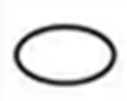 |
| Slip stitch | 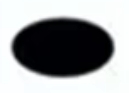 |
| Single crochet | 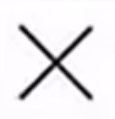 |
| Half double crochet | 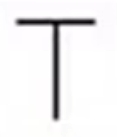 |
| Double crochet | 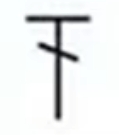 |
| Treble crochet | 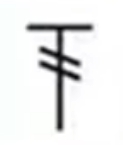 |
Japanese diagrams are typically read:
- In rows: right to left for right-side rows, left to right for wrong-side rows
- In rounds: counterclockwise (from right to left)
- From bottom to top (representing the physical building of the project)
Most Japanese pattern books include a symbol key at the beginning, though these standardized symbols remain fairly consistent across publications. The visual nature of these patterns makes them particularly effective for intricate lace, complex textures, and motif-based designs.
Working with symbol patterns can be advantageous for visual learners and offers a clear representation of how stitches relate to one another in the finished piece. Many crocheters find that once they understand the basic symbols, these patterns become easier to follow than written instructions.
Chinese Crochet Terms
Chinese crochet patterns have developed a unique alphanumeric shorthand system that combines aspects of written abbreviations with visual representation. This system commonly uses Latin letters that visually evoke the appearance or structure of the corresponding stitches.
Common Chinese Crochet Letter Codes
| Letter Code | English Equivalent |
|---|---|
| X | single crochet (sc) |
| T | half double crochet (hdc) |
| F | double crochet (dc) |
| E | treble crochet (tr) |
| CH | chain (ch) |
| V | increase(inc) |
| A | decrease(dec) |
| SL | slip stitch(sl st) |
| S | skip(sk) |
Reading Crochet Patterns
Successfully interpreting crochet patterns requires understanding not only individual abbreviations but also the structure and conventions of pattern writing. It’s important to emphasize that specific reading methods and notations can vary significantly between designers. Always prioritize the pattern author’s explanation of their notation system, especially when diagrams or special instructions are provided.
Common Pattern Elements
- Materials and Gauge Section
- Yarn recommendations (weight, yardage, specific brands)
- Hook size suggestions
- Finished dimensions
- Gauge information (e.g., “16 sc and 20 rows = 4 inches”)
- Abbreviations Key
- List of abbreviations used in the pattern
- Special stitch definitions
- Symbol key for any charts included
- Special Notes
- Techniques required
- Construction method overview
- Tips for challenging sections
- Pattern Instructions
- Foundation (usually chain count)
- Row-by-row or round-by-round directions
- Increase/decrease shaping
- Finishing details
Interpreting Pattern Formatting
Patterns use specific formatting conventions to organize instructions, though these can vary between designers:
- Round/row indicators: Instructions like “R5: ch, [1 sc, sc inc] x 6, sl st” indicate that in Round 5, you should start with a chain stitch, then repeat the pattern “1 single crochet, single crochet increase” 6 times, and end with a slip stitch.
- Brackets with multipliers: The format [instructions] x number means to repeat everything within the brackets the specified number of times. For example, “[1 sc, sc inc] x 6” means to repeat the sequence “1 single crochet, single crochet increase” a total of 6 times.
- Parentheses for stitch grouping: Parentheses ( ) typically indicate that all stitches within them are worked into the same stitch. For example, “(sc+sc+sc)” means working 3 single crochet stitches all into the same stitch.
- Asterisks and repetition: Instructions like “*dc, ch 1, dc in next st; repeat from * across” mean you’ll repeat everything between the asterisk and semicolon until you reach the end of the row.
- Brackets and parentheses for grouping: These often group instructions that should be treated as a single unit. “[Dc, ch 2, dc] in next st” means all three elements are worked into the same stitch. Numbers after brackets often indicate repetition: “[2 dc, ch 1] 3 times” means you’ll work that sequence three times consecutively.
- Stitch counts: Numbers in parentheses at the end of row instructions (like “Row 1: ch 20, sc in 2nd ch from hook and each ch across (19 sc)”) confirm how many stitches you should have after completing that row—useful for checking your work.
- Multi-size instructions: Patterns with multiple sizes often present variations like “ch 50 (58, 66, 74)” where each number in parentheses corresponds to different sizes.
When encountering unfamiliar formatting or ambiguous instructions:
- Check the pattern’s introduction for the designer’s notation explanations
- Review any diagrams or charts that accompany the written instructions
- Look for stitch tutorials if special techniques are mentioned
- Search online resources for clarification
- Contact the pattern designer if available
Remember that designers may develop their own shorthand for efficiency or clarity in specific projects. When in doubt, follow the pattern author’s guidance on how to interpret their specific notation style.
Conclusion
Understanding crochet abbreviations across different systems unlocks a world of design possibilities spanning multiple cultural traditions. While initially challenging, familiarity with these shorthand methods ultimately enhances your crocheting experience.